
Electrical Panel Replacement
Full replacement of failed, recalled, or end-of-life electrical panels — also called breaker boxes, breaker panels, circuit panels, or load centers — for Utah homeowners.
We replace Federal Pacific Stab-Lok, Zinsco, Challenger, Pushmatic, fuse boxes, and any panel that's fire-damaged or end-of-life with modern, code-compliant load centers. Licensed, insured, permitted, and inspected.
Typical investment: $2200-$4500 • Most replacements complete in one day
Replacement vs. Upgrade vs. Repair — which do you actually need?
These terms get used interchangeably, but they're three different jobs. Here's the straight answer:
Repair
Fix one specific issue — a tripping breaker, a loose connection, a noisy buzz — while keeping the existing panel.
Circuit breaker replacement →Upgrade
Add capacity or new breakers when the existing panel is still safe — typically for an EV charger, hot tub, heat pump, or remodel.
Panel upgrade →Replacement (this page)
Swap the entire breaker box because it's failed, recalled, fire-damaged, or end-of-life. The right call when the panel itself is unsafe.
You're in the right place.Not sure which one applies to your home? Get a free assessment — we'll tell you the honest answer, even if it's the cheaper repair.
When should you replace your electrical panel?
If you see any of these in your breaker box, full panel replacement is the right move. Patching or upgrading won't solve the underlying safety problem.
Recalled or Defective Brand
Federal Pacific Stab-Lok, Zinsco, Challenger, or Pushmatic panels — these have known defects that prevent breakers from tripping during overloads.
Scorching, Rust, or Melted Breakers
Visible burn marks, brown discoloration, rust, or breakers that look melted are signs the panel is failing and must be replaced.
Burning Smell Near the Panel
Any burning smell coming from the breaker box is an emergency. Turn off the main breaker if safe, then call us immediately.
Fuse Box Instead of Breakers
Fuse boxes are obsolete, often undersized for modern homes, and many insurance carriers won't cover homes that still use them.
Double-Tapped or Mismatched Breakers
Two wires under one breaker terminal, off-brand breakers, or missing knockouts are signs the panel has been jury-rigged and is no longer safe.
Panel is 30+ Years Old
Even quality panels reach end-of-life. After three decades, bus bars corrode, breakers wear, and full replacement is the safe path forward.
Smell something burning? Stop and call.
A burning smell, sparks, or scorching around the panel means imminent fire risk. Shut off the main breaker if it's safe to reach, leave the area, and call us at (385) 481-5550 right away.
Recalled, defective, and outdated panel brands we replace
These panels were sold for decades in Utah homes before their defects were documented. They're still in place today — and they're the most common reason for full panel replacement. If you have any of these, it's a replacement, not an upgrade.
Federal Pacific Electric (FPE) — Stab-Lok
Manufactured from the 1950s through the 1980s. The Stab-Lok breaker design fails to trip under overload or short-circuit conditions in independent testing — up to 1 in 4 breakers fails when it matters most.
Common labels: “FPE,” “Stab-Lok,” “Federal Pioneer” (Canadian variant). Always replace.
Zinsco / Sylvania-Zinsco / GTE-Sylvania
Manufactured from the 1950s through the 1970s. The aluminum bus bars melt under load, fusing breakers into the “on” position so they can't trip. Telltale signs: pink, red, blue, or green breaker handles arranged horizontally.
Common labels: “Zinsco,” “Sylvania,” “GTE-Sylvania,” “Magnatrip.” Replace immediately.
Pushmatic / Bulldog
Manufactured from the 1950s through the 1980s by Bulldog Electric, ITE, and later Siemens. Uses a push-button breaker design that wears out, sticks, and fails to trip. Replacement breakers are nearly impossible to source, and the bus bars commonly corrode.
Common labels: “Pushmatic,” “Bulldog,” “ITE Pushmatic.” Always replace — finding parts isn't worth the risk.
Challenger
Manufactured in the 1980s. The HACR-rated breakers have a known defect that causes them to overheat and fail to trip. Class-action settlements documented the issue. Look for the “Challenger” nameplate or branded breakers inside an otherwise-anonymous panel.
Common labels: “Challenger” nameplate or breaker brand. Replace.
Fuse Boxes (any brand)
Pre-1965 homes often still have Edison-base or cartridge fuse panels. They're typically 60-amp service — not enough for any modern appliance load — and fuses get oversized by occupants who don't want to keep replacing them, creating a fire risk.
Common labels: “Edison,” “Trumbull,” “Wadsworth,” “Bryant.” Many insurance carriers won't cover fuse-box homes.
ITE / Bulldog Split-Bus Panels
Panels without a single main breaker — instead using up to six disconnects arranged across two bus sections. Common in 1960s and 1970s homes. Code-allowed when installed but considered outdated and confusing for shutoff; usually paired with insufficient amperage for modern use.
Common labels: “ITE,” “Bulldog Pushmatic Split-Bus.” Replace when remodeling or adding loads.
Not sure which brand you have? Send us a photo of your panel label and the inside of the panel cover, and we'll identify it — free, no obligation.
Text or call (385) 481-5550How an electrical panel replacement works
Most indoor panel replacements complete in a single day. Here's exactly what happens, step by step.
- 1
Free In-Home Assessment
We inspect your existing panel, identify the brand, check for fire-risk indicators, and confirm whether you need a full replacement or a capacity upgrade.
- 2
Quote & Permit
You get a detailed written quote with the new panel brand, amperage, and full scope of work. We pull the permit and schedule the city or county inspection.
- 3
Power-Down & Removal
On install day we coordinate the utility disconnect (if needed), safely de-energize the old panel, label every existing circuit, and remove the old box.
- 4
New Load Center Installed
We mount the new code-compliant load center, install fresh breakers (including AFCI/GFCI where code requires), and neatly transfer every circuit.
- 5
Inspection & Power-On
City inspector verifies the work meets current NEC and local code. Power is reconnected, and we test every circuit before we leave.
Adding an EV charger, hot tub, or heat pump? You may need a replacement, not an upgrade.
When homeowners ask us to add big new loads, the assessment usually goes one of two ways: there's room to add a breaker to the existing panel (a panel upgrade), or the existing panel is too full, too old, or unsafe — and full replacement is the right call. Here's when full replacement wins.
EV Charger Installation (Tesla, Rivian, ChargePoint, etc.)
Level 2 EV chargers pull 40–50 amps. On a 100A panel that's already running an AC, electric range, and dryer, there's usually no headroom — and many older panels don't have a slot for the new breaker either. Pair the EV install with a panel replacement and a service upgrade once, and you're set for the next 30 years.
Hot Tub or Spa Circuit
Most hot tubs need a dedicated 50–60 amp GFCI circuit. On a maxed-out older panel, that's usually impossible to add cleanly. We pair hot-tub installs with panel replacement when the existing panel can't support it safely.
Heat Pump or Mini-Split System
Whole-home heat pumps and multi-zone mini-splits add 30–60 ampsof new load. If your panel is full or marginal, replacement during the HVAC upgrade is the smart sequence — otherwise you pay to schedule two separate jobs.
Old Breakers That Keep Tripping
Breakers wear out. If yours are 15–25+ years old and trip nuisance-style or refuse to reset, that's a panel-wide issue, not a one- breaker fix. We replace the whole load center with new breakers under a single manufacturer warranty.
Basement Finish, Kitchen Remodel, or Addition
Adding rooms or major appliances usually requires multiple new dedicated circuits. If your existing panel doesn't have the slot count or capacity, replacement — or a service upgrade plus replacement — unlocks the remodel without compromise.
Solar, Battery Backup, or Generator Transfer Switch
Solar interconnect, battery backup, and generator transfer switches all require panel space and code-compliant bus bars. Older panels often can't accommodate them — replacement is the path forward.
The honest answer: about half the time the existing panel can handle a new circuit and the right call is an upgrade. The other half, it's a replacement. Free assessment tells you which.
Panel brands we install
We only install top-tier load centers with strong manufacturer warranties and wide breaker availability — so future expansions and repairs are easy.
We'll recommend the right brand for your home — based on your existing wiring, future plans, and budget.
Why Utah homeowners choose us for panel replacements
Electrical panel replacement — frequently asked questions
What's the difference between an electrical panel replacement and an upgrade?
A panel replacement swaps the entire breaker box (also called a load center or circuit panel) for a new one — typically because the existing panel is failed, recalled, fire-damaged, or end-of-life. A panel upgrade keeps the existing panel and adds capacity or new breakers. If you have a Federal Pacific, Zinsco, Challenger, or Pushmatic panel, a fuse box, or visible damage like rust, scorching, or melted breakers, you need a replacement — not an upgrade.
Do I need to replace a Federal Pacific, Zinsco, or Challenger panel?
Yes. Federal Pacific Stab-Lok, Zinsco, and Challenger panels have well-documented defects that prevent breakers from tripping during overloads or short circuits — creating a fire risk. Insurance carriers increasingly refuse to cover homes with these panels. We strongly recommend replacing them regardless of the panel's age or apparent condition.
How long does an electrical panel replacement take?
Most indoor panel replacements take one full day. Power is off for 4–8 hours while we remove the old panel, install the new load center, transfer and label every circuit, and bring it online for inspection. We'll confirm a precise timeline at your free in-home assessment.
Will I lose power during the replacement?
Yes, power is off for several hours during the swap. We schedule the work to minimize disruption, and most replacements have power restored the same day. For temperature-sensitive situations (medical equipment, freezers, infants) we can plan around your schedule.
Do you handle the permit and inspection?
Yes. Every panel replacement we do is pulled under permit and inspected by your city or county building department. We handle the entire permitting process, schedule the inspection, and only finalize the job once it passes.
What brands of panels do you install?
We install Square D (Homeline and QO), Eaton (CH series), Siemens, and Leviton load centers — all top-tier brands with strong manufacturer warranties and wide breaker availability. We'll recommend the right brand based on your home and budget.
What is a Zinsco panel and why does it need to be replaced?
Zinsco panels (sometimes labeled Sylvania, GTE-Sylvania, or Magnatrip) were sold from the 1950s through the 1970s. The aluminum bus bars melt under load and fuse breakers in the 'on' position so they can't trip — meaning a short circuit or overload can keep arcing instead of cutting power. Telltale signs are pink, red, blue, or green breaker handles arranged horizontally. Replace any Zinsco panel regardless of age or condition.
What is a Pushmatic / Bulldog panel and is it dangerous?
Pushmatic panels use push-button-style breakers (not toggle switches) and were made by Bulldog Electric, ITE, and later Siemens from the 1950s through the 1980s. The mechanisms wear out and stick, replacement breakers are nearly impossible to source, and the bus bars commonly corrode. They're not officially recalled, but the safety and parts-availability issues mean replacement is the right call.
What is a Federal Pacific Stab-Lok panel?
Federal Pacific Electric (FPE) Stab-Lok panels were installed in millions of US homes between the 1950s and 1980s. Independent testing has shown up to 1 in 4 breakers fails to trip during overload or short-circuit conditions. They're a leading documented cause of electrical fires from panel-related failures. If you see 'FPE,' 'Stab-Lok,' or 'Federal Pioneer' on your panel, replace it.
Do you replace fuse boxes with modern breaker panels?
Yes — this is one of our most common jobs in older Utah homes. Pre-1965 homes often have Edison-base or cartridge fuse panels (typically 60-amp service). We replace the fuse box and usually upgrade the service to 200-amp as part of the same project so the home can support modern appliances and major loads like EV chargers.
Related electrical panel services
Electrical panel replacement throughout Utah
We replace electrical panels for homeowners across Salt Lake County, Utah County, and Davis County. Tap your city for local information.
Recent electrical panel replacement projects
Real jobs we've completed for Utah homeowners.
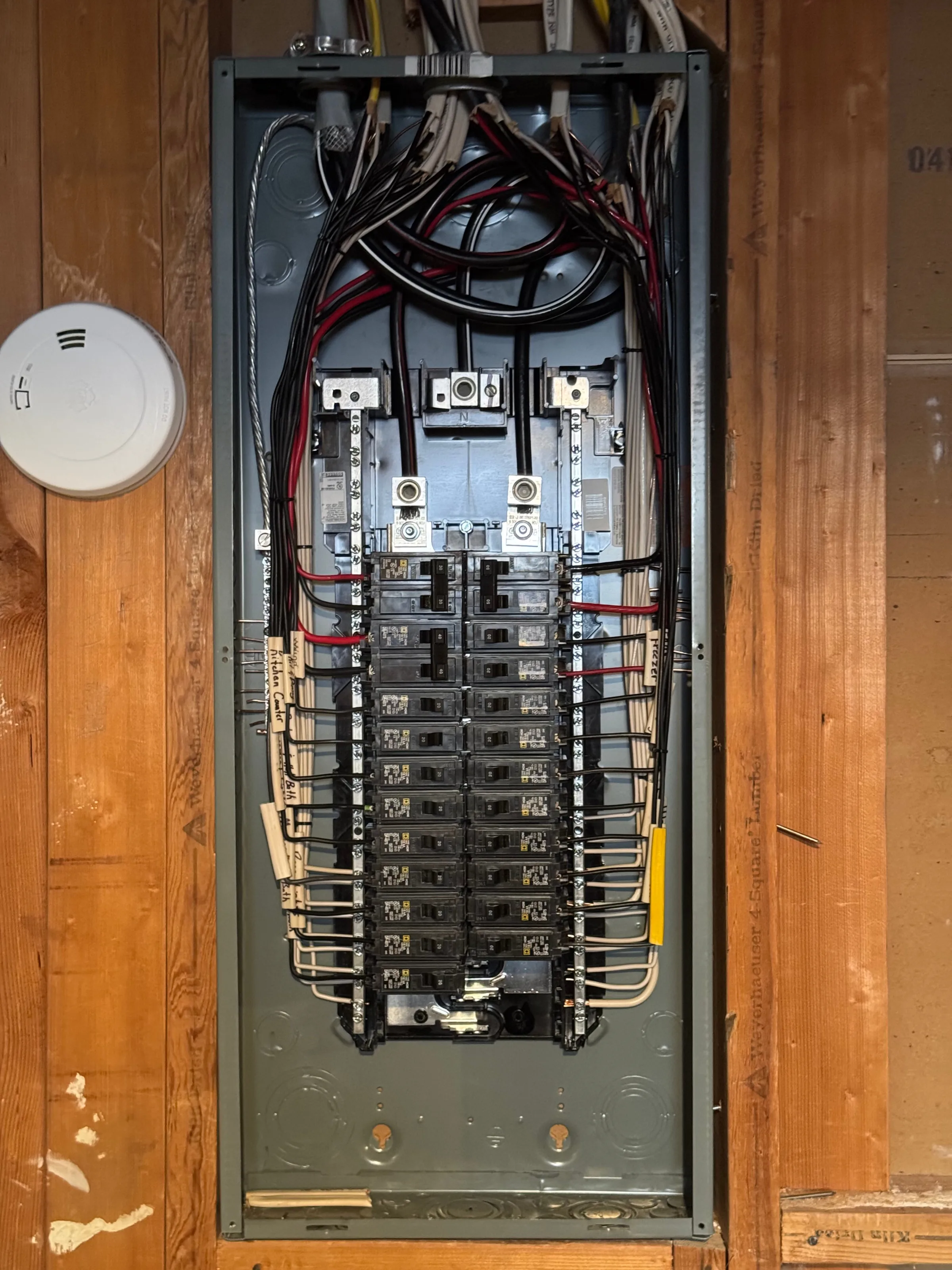
Orem, UT
Electrical Panel and Meter Replacement in Orem
Orem homeowner replaced an aging electrical panel and meter with new equipment to restore safe, reliable power distribution.
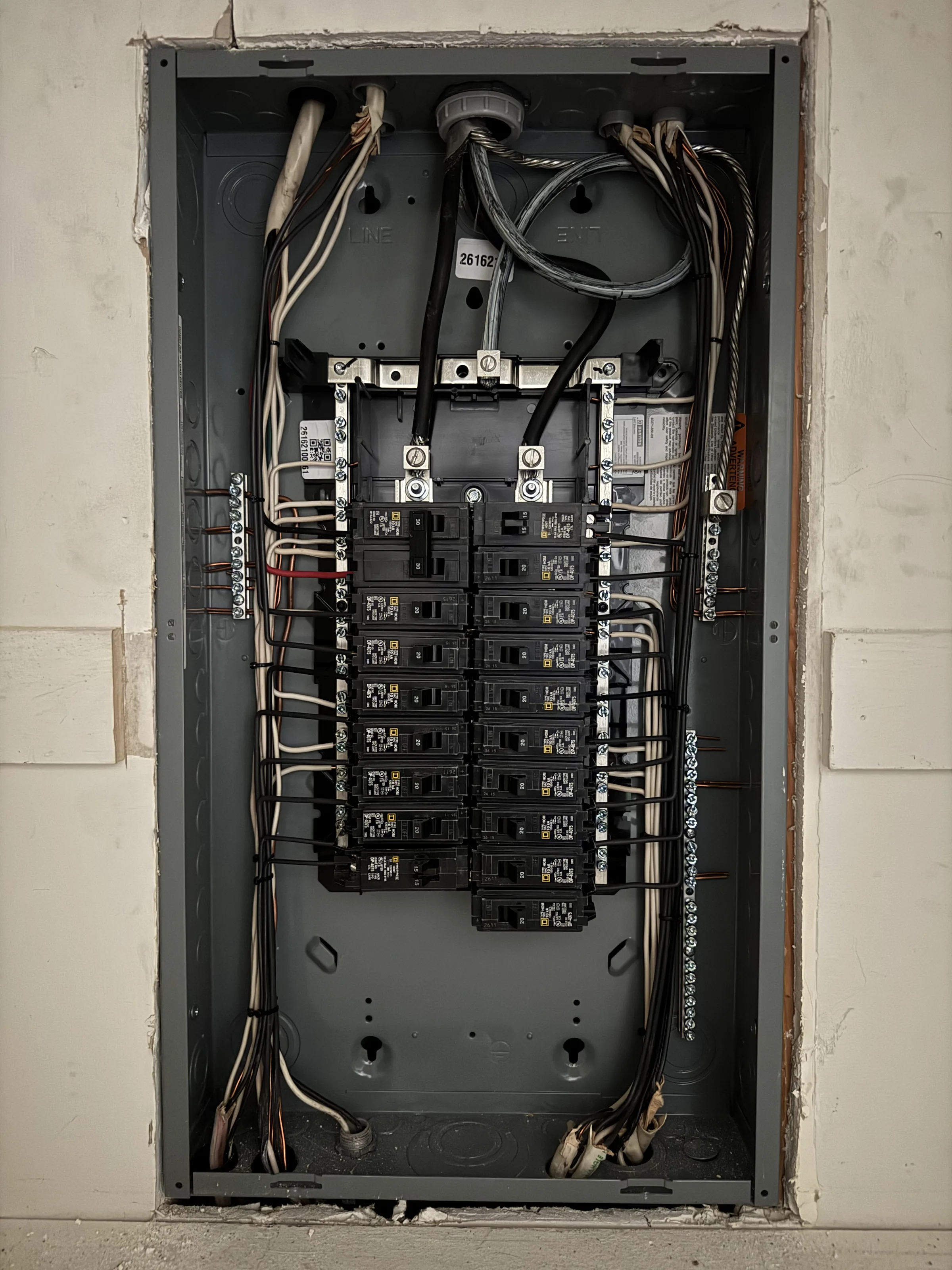
Orem, UT
Electrical Panel Replacement in Orem
Utah Home Electric replaced an older electrical panel with a new one in Orem. Call for a free quote.
Guides on electrical panel replacement
Straight answers to the questions homeowners ask most.
Ready to replace your electrical panel?
Free, honest in-home assessment. We'll tell you whether you need a replacement, an upgrade, or just a simple repair — and price it transparently.