
Meter Main Replacement
Replacement of the outdoor meter main — also called the service panel, service entrance, or combo meter-main — for Utah homeowners.
We replace meter bases, service masts, weatherheads, and combo disconnect panels, and we handle 100-amp to 200-amp service upgrades. Utility coordination, permits, and inspections all included.
Typical investment: $2500-$5000 • Most replacements complete same-day
Meter main vs. electrical panel — what's the difference?
These are two different physical units, and they get replaced for different reasons. Here's the straight answer:
Meter Main / Service Panel
The outdoor unit attached to the exterior wall of your home. It combines the utility meter base and the main disconnect breaker — it's where power physically enters your house from Rocky Mountain Power.
Replaced when: damaged, undersized, or upgrading from 100A to 200A service.
Electrical Panel / Breaker Box
The indoor unit (also called a load center, circuit panel, or breaker box). It receives power from the meter main and distributes circuits to every room and appliance in your home.
Indoor panel replacement →Not sure which one you need? Get a free assessment — we'll inspect both and tell you what's actually required.
When do you need a meter main replacement?
If any of these apply, you're looking at a meter main / service panel replacement rather than an indoor panel job.
Going from 100A to 200A Service
Adding an EV charger, heat pump, hot tub, or finishing a basement often requires upgrading from 100-amp to 200-amp service — which means a new meter main.
Damaged or Pulled-Away Service Mast
If the conduit running up to the weatherhead is bent, rusted, or pulling away from your house, the entire service entrance needs replacement.
Cracked or Rusted Meter Base
Water intrusion, rust, or visible cracks in the outdoor meter base are immediate safety concerns and grounds for full meter main replacement.
Old Outdoor Combo Disconnect
Many older homes have an outdoor combo meter-main panel that combines the meter base and main disconnect — these wear out and need to be replaced as a unit.
Insurance or Inspection Failure
Home inspectors and insurance carriers flag damaged or outdated service entrances. Replacement brings your service to current code so the deal closes.
Tree, Storm, or Vehicle Damage
If a fallen branch, wind, or accident damaged the service entrance, the meter main, mast, and weatherhead typically need full replacement together.
100-amp to 200-amp service upgrade
The single most common meter main job we do — and the one that unlocks every other modern upgrade.
| Service Size | What it Supports |
|---|---|
| 60-amp service | Older homes only. Insurance carriers often refuse to cover. Always replace. |
| 100-amp service | Basic appliances and lighting only. Cannot support EV chargers, hot tubs, or modern HVAC without an upgrade. |
| 200-amp service (most common) | Standard for modern homes. Handles EV chargers, central AC, electric range, and typical Utah appliances comfortably. |
| 400-amp service | Large homes, multiple EV chargers, electric heating, workshops, or guest casitas. |
Most Utah service upgrades we do are 100A → 200A. We'll size your service to your actual load and future plans.
Outdated & unsafe service equipment we replace
The outdoor meter base, service mast, and main disconnect have a finite lifespan — and Utah weather, sun, and wind shorten it. These are the most common situations that mean a full meter main / service entrance replacement.
Federal Pacific (FPE) Outdoor Service Panels
Some 1960s–1980s homes have an FPE-branded outdoor combo meter-main. The same Stab-Lok defects that affect indoor panels apply here — the main disconnect itself may fail to trip. Replace the entire outdoor unit.
60-Amp or Smaller Service
Pre-1965 homes often still have 60-amp service. Insurance carriers increasingly refuse to underwrite homes at this amperage, and nothing modern — AC, electric range, EV charger — can run on it safely. Upgrade to 200-amp.
100-Amp Service With Modern Loads
100-amp service was standard in the 1970s–1990s but won't support adding an EV charger, heat pump, hot tub, or kitchen remodel without exceeding code load calculations. 200-amp service is the modern default.
Outdoor Combo Meter-Main with No Main Breaker
Some old outdoor service panels use a split-bus design with up to six pull-out disconnects instead of a single main breaker — confusing to shut off in an emergency and no longer code-preferred. We replace these with a single, code-compliant main disconnect.
Bent, Rusted, or Pulled-Away Service Mast
If the conduit running up the side of your home to the weatherhead is bent, rusted, leaning, or pulling away from the structure, water gets into the meter base and the entire service entrance must be replaced — mast, weatherhead, meter base, and main disconnect together.
Cracked Meter Base or Water Intrusion
Cracked plastic meter sockets, rust streaks below the meter, or visible moisture inside the meter base are immediate replacement triggers. Utah's freeze-thaw cycles make this common on 30+ year old equipment.
How a meter main replacement works
Most meter main jobs complete in a single day, including utility coordination and inspection. Here's exactly what happens.
- 1
Free In-Home Assessment
We inspect your meter main, service mast, weatherhead, and grounding. We confirm whether you need full replacement, a service upgrade, or just a mast/weatherhead repair.
- 2
Quote, Permit, and Utility Coordination
You get a clear written quote. We pull the city or county electrical permit and schedule the utility (Rocky Mountain Power in most of Utah) to disconnect and reconnect at the meter.
- 3
Power Disconnect at the Meter
On install day the utility pulls the meter and de-energizes your home's service feed. We confirm the lines are dead before any cutting begins.
- 4
Meter Main, Mast & Weatherhead Installed
We replace the meter base, main disconnect, service mast, weatherhead, and grounding electrode system as a complete code-compliant service entrance.
- 5
Inspection
City or county inspector verifies the new service entrance meets NEC and local code. We don't reconnect until inspection passes.
- 6
Utility Reconnect & Power-On
The utility re-installs the meter and energizes your service. We test the new equipment, label everything, and confirm your home is fully back online.
Why Utah homeowners trust us with their service entrance
Meter main replacement — frequently asked questions
What's the difference between a meter main and an electrical panel?
The meter main (also called a service panel or service entrance) is the outdoor unit that combines your utility meter base and main disconnect breaker — it's where power from Rocky Mountain Power physically enters your home. The electrical panel (breaker box / load center) is the indoor unit that distributes circuits throughout your house. Many homes have both as separate units; others have a combo meter-main outdoors plus indoor sub-panels. We replace both.
Do I need a meter main replacement or just a panel upgrade?
If the outdoor meter base, weatherhead, service mast, or main disconnect is damaged, rusted, undersized, or you're going from 100-amp to 200-amp service, you need a meter main replacement (or a service entrance upgrade). If only the indoor breakers need attention, a panel upgrade or replacement is enough. Our free assessment makes the call clear.
Does the power company need to be involved?
Yes. Replacing the meter main requires coordination with the utility (Rocky Mountain Power in most of Utah) to disconnect and reconnect service at the meter. We handle all utility coordination, scheduling, permitting, and inspections — you don't have to make a single phone call.
How long will I be without power?
For a standard meter main replacement, power is off for 4–8 hours on installation day while we coordinate the utility disconnect, swap the meter base and main disconnect, and get the new unit inspected and reconnected. Most jobs finish same-day.
Can you do a 100-amp to 200-amp service upgrade?
Yes. Upgrading from 100-amp to 200-amp service is one of our most common meter main jobs. We coordinate with the utility, pull the permit, replace the meter base, service mast, and main disconnect, and bring your home to modern code — typically in one day.
Will the replacement also fix a damaged service mast or weatherhead?
Yes. If your service mast or weatherhead is bent, rusted, or pulling away from the house, we replace it as part of the meter main job. See our service-mast-upgrade page for standalone mast and weatherhead work.
Related electrical panel services
Meter main replacement throughout Utah
We replace meter mains and handle service upgrades across Salt Lake County, Utah County, and Davis County. Tap your city for local information.
Recent meter main replacement projects
Real jobs we've completed for Utah homeowners.
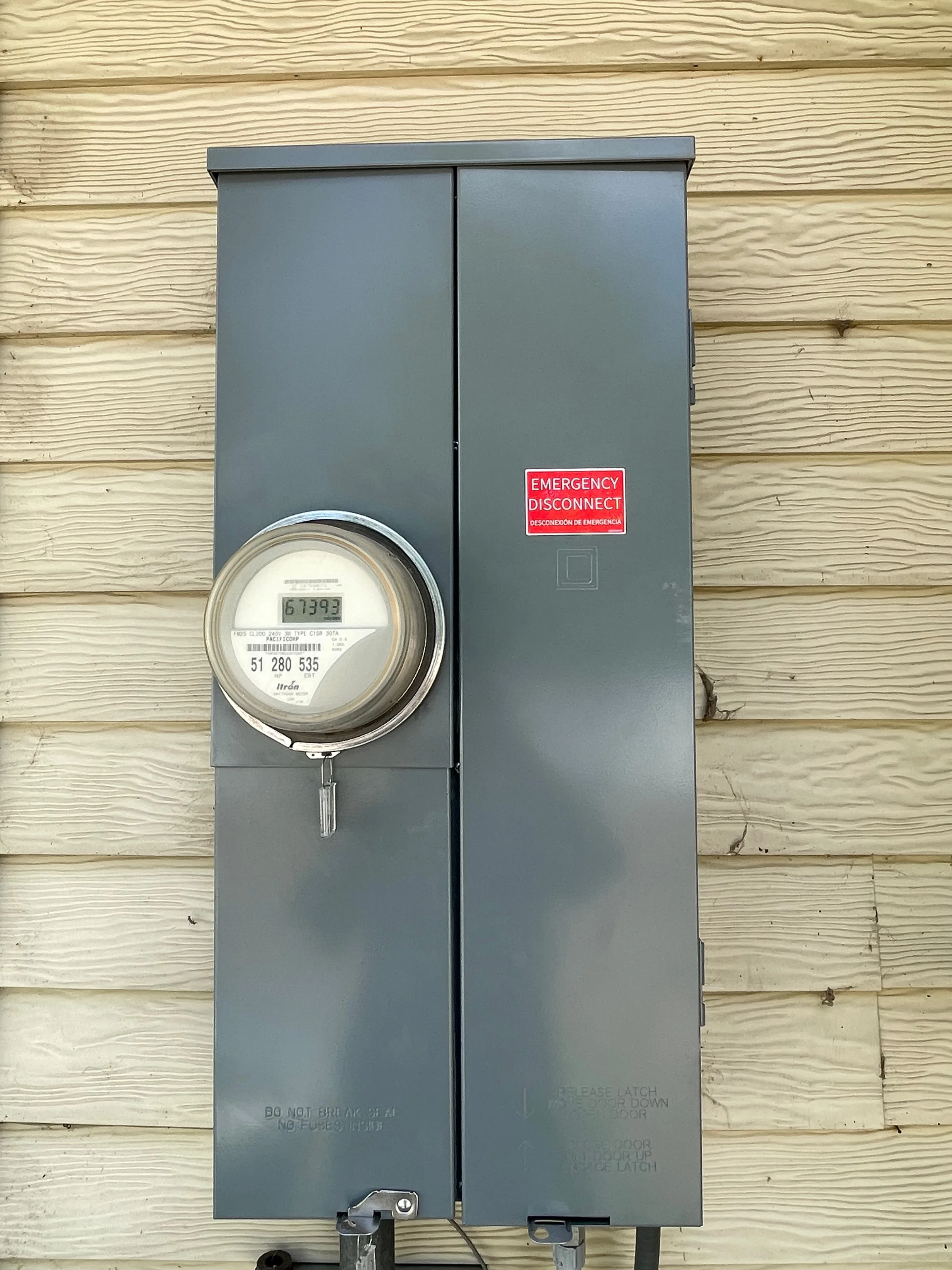
Orem, UT
200-Amp Meter Main Replacement in Orem
Orem homeowner upgraded their aging electrical panel with a new 200-amp meter main to meet current home electrical demands.
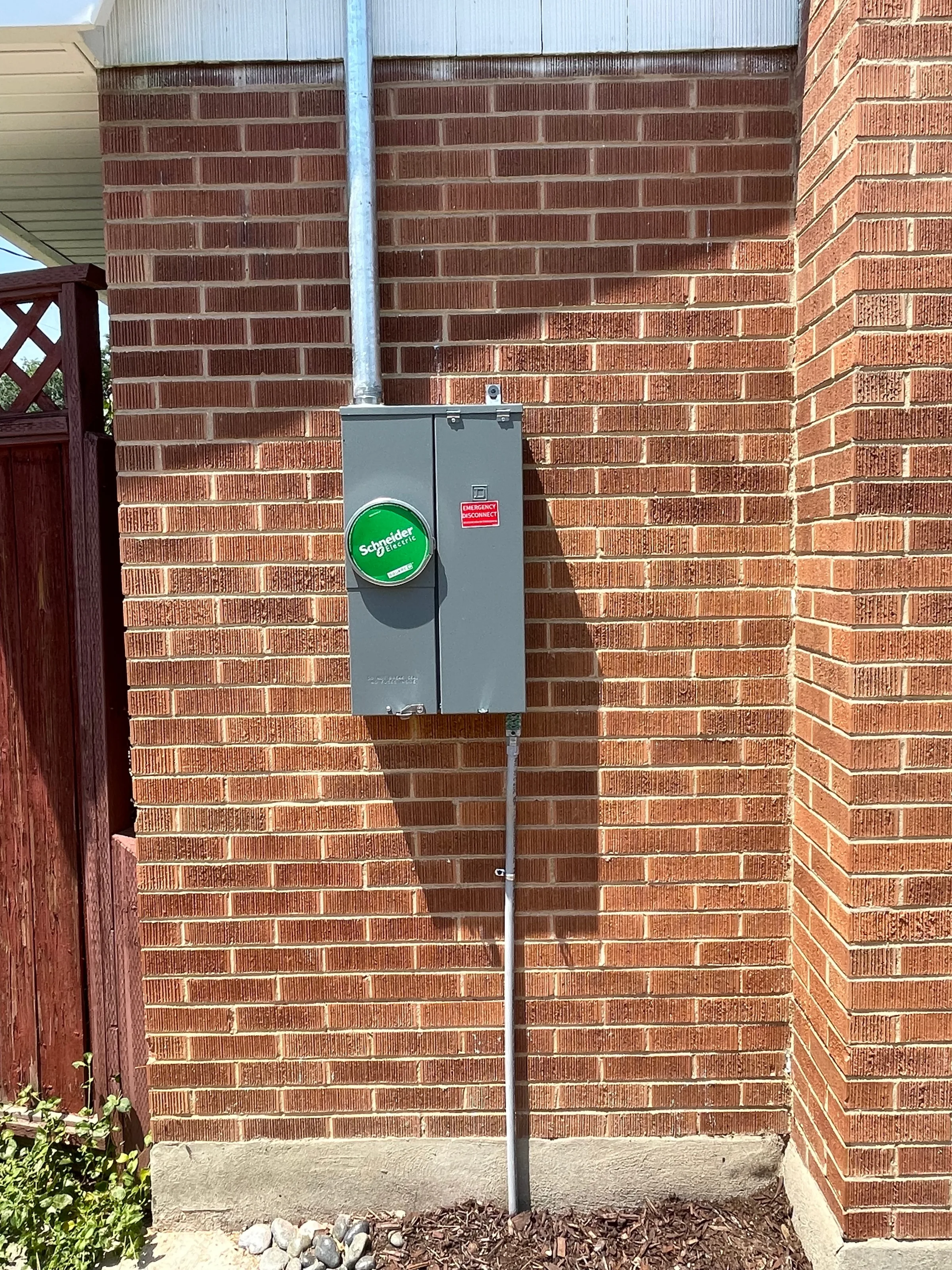
Bountiful, UT
100-Amp Meter Main Replacement in Bountiful
Utah Home Electric installed a new 100-amp meter main for a Bountiful homeowner. Learn how we handle meter upgrades.
Ready to replace your meter main?
Free, honest in-home assessment. We'll tell you whether you need a meter main replacement, a service upgrade, or a simpler mast/weatherhead repair — and price it clearly.